Archive for the ‘local food’ Category

Good Reading

Wednesday, August 20th, 2008

Check out http://thearchdruidreport.blogspot.com/ for some of the wisest, in-depth, thought provoking blog articles on what our society is facing in a post-peak oil world.

Time to Order Seeds and Plants

Sunday, February 10th, 2008

 Well, it’s one degree Fahrenheit outside and I am keeping my self warm with thoughts of spring planting. Our average last frost in central Iowa is about 12 weeks away. It’s time to get your seeds and plants ordered. You can even start some flower and allium family seeds now. I’ve had good luck growing leeks from seed and they don’t take much space.  I sow them thickly in a 3” pot, grow them under fluorescent shop lights (more on that in another article), trim the tops back so they stay about 3” tall, and when it comes time to plant them, dump the pot out and grab each individual seedling and put it in a little trench.

Here are some of the seed companies that I’ve used in the past and have been happy with:
  • FEDCO - www.fedcoseeds.com; FEDCO is a cooperatively owned garden supply company.  They have separate supplies, trees, potatoes (Moose Tubers), and bulb catalogs.  Their catalog is full of whimsical illustrations, and amusing descriptions of their open pollinated and hybrid varieties.
  • Jung Seed – www.jungseed.com; Family owned and operated for 101 years, more of a mainstream company with a catalog packed with full color photographs. Unlike a lot of mainstream companies, they have a decent selection of open pollinated and heirloom varieties. They also have one or two of cultivars of many unusual varieties you can find at One Green World: sea berry, honeyberry, paw paws, hardy kiwi, etc.
  • One Green World – www.onegreenworld; has numerous varieties of unusual fruiting trees and shrubs, berries, and nut trees from around the world.
  • Peaceful Valley Farm Supply - www.groworganic.com; PVFS has a large selection of organic hybrid and open pollinated seeds, trees, berries and probably the biggest selection of organic supplies out there.  Seed descriptions are bare bones (but you can look information up elsewhere), prices are economical and you can receive free seeds with orders over $50. 
  • Seed Saver’s Exchange – www.seedsavers.org; Established in 1975, membership is $35. You’ll then receive their mailings detailing 11,000 varieties, and trade with the members who maintain them. You can also order from their full color catalog or web site (with an abundant selection of heirloom/open pollinated seeds) and support their mission. Visit their farm if you are ever in Northeast Iowa – it’s a great time!
I am looking forward to trying these companies:
  • Baker Creek Heirloom Seeds – www.rareseeds.com; Started by Jere Gettle when he was only 17 (1998), his catalog has grown to 100 pages of full color photographs and extensive descriptions of 100% open pollinated varieties. He has many unusual varieties from around the world.
  • Sandhill Preservation - www.sandhillpreservation.com; Family-run, low tech (read their instructions), extensive collection of open pollinated seeds, sweet potatoes and heirloom chickens. Past customers report packets with generous amounts of seed, free packets, and good prices.  
Seed and Plant Exchanges
There are a variety of groups where you can trade seeds with other people:
If you haven’t grown your own food, I hope you’ll give it a try this year. Start small, do some research, take time to observe and learn, and enjoy your harvest. If you are an avid gardener, I’d love to hear about your favorites, growing tips, etc. in the comments section.   

Practical Farmers of Iowa Conference

Sunday, January 13th, 2008

Another exciting thing about joining PFI was the fact that their annual conference was going to be held this year just a couple miles from my home and it was packed with all sorts of interesting presentations.  I attended the conference this Friday and Saturday and it was a very informative and enjoyable time.  It also seemed that about anyone involved in sustainable agriculture and local foods was in attendance.

I attended a session for new farmers or people considering the plunge, and a sustainable energy production session on Friday.  I also had the pleasure of seeing my fellow Cornellian, Laura Krouse, receive the Spencer Award honoring farmers, educators and researchers who have made a significant contribution toward stability of mainstream family farms in Iowa.  Laura operates Abbe Hills Gardens, a 120 family CSA near Mount Vernon.

We brought the whole family to King Corn Friday night.  Anne and I, and our ten year old son found it very entertaining and informative.  Our six year old daughter only lasted through half the movie.  She hadn’t gone to the movie with high expectations but the next morning said that it was better than she expected.  Anyhow, the rest of us highly recommend it.

Kamyar Enshayan from UNI was presented with the Sustainable Agriculture Achievement Award Saturday morning. Kamyar has been promoting local food for over a decade including establishing the Buy Fresh Buy Local campaign in Northeast Iowa. 

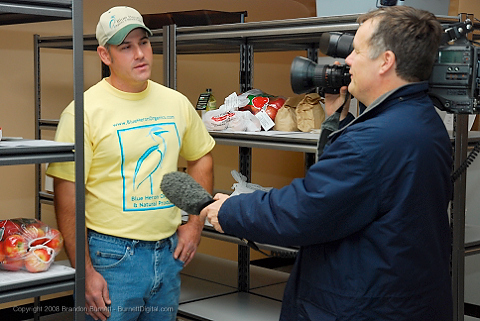
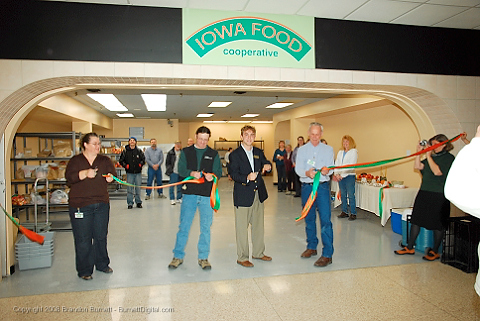
Also on Saturday I sat in on an update on the Iowa Food Cooperative, listened to Richard de Wilde of Harmony Valley Farm describe how he went from a $500 loss in the mid 70s to a profitable 1000 family CSA today.  We learned about all the planning, management, equipment and people that go into an operation of that size.

The only disappoint for me was to hear that next year’s conference won’t be quite so close to home, but will be held instead at Marshalltown Community College.

Iowa Food Cooperative

Sunday, January 13th, 2008

I’ve been thinking about joining Practical Farmers of Iowa for quite a few years now and finally did this winter.  PFI has been a leader in exploring environmentally friendly and economically successful farming approaches, and promoting local foods for years.  About a year ago I read their press release announcing the creation of the Iowa Food Cooperative and knew that I wanted to get involved.  I had been seriously looking at ways to evolve this Think Global Eat Local web site into an online ordering system but it was clear that I should see how I could get involved with the IFC instead.

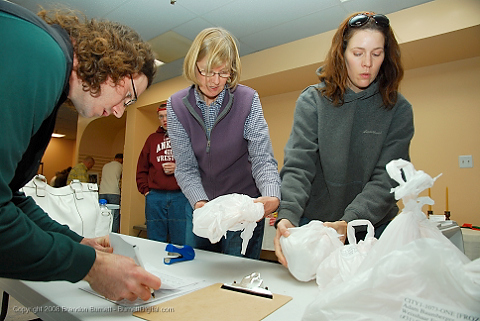
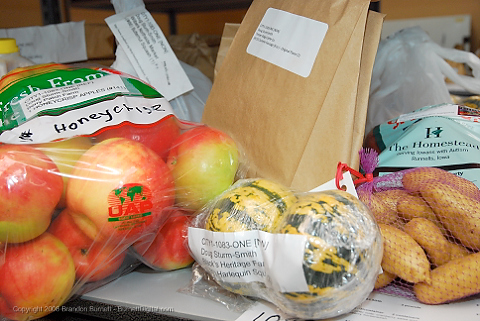
The Iowa Food Cooperative is going to be a web based system that allows consumers to order locally produced products from local farmers on a monthly basis (to start).  Those orders will be collected and distributed from a central location (in Des Moines at the start).  It is modelled after similar systems in place in Oklahoma and Nebraska.  The IFC should supplement existing farmer’s markets and CSAs, by providing more staple products then those markets.

Bookmark this site or subscribe to the feed and stay tuned for updates.

Farm Crawl

Sunday, October 7th, 2007

You’ve heard of pub crawls, but farm crawls?  Well, five farms in South Central Iowa banded together and sponsored an afternoon of farm tours on October 7th.  You can read more about it at www.farmcrawl.com.  My family had a great time and managed to visit four of the five farms.  Check back soon for photos and more information on the food and fun.

Fall

Sunday, October 7th, 2007

I love fall — especially when it comes to food.  I love the hearty, filling nature of apples, potatoes, winter squash, carrots, parsnips…  It’s also nice to have some cool days when heating up the kitchen with cooking doesn’t seem counter productive to the task of trying to keep cool. 

Circle M FarmsI also love the colors of fall.  I visited the second-to-last Valley Junction Farmer’s Market to stock up on some items, and one stand really stood out: Circle M Produce from Martensdale Iowa.  I visited with Circle M’s proprieter Mike Misjak.  Mike is at a farmer’s market about every day of the week, except Sunday when he’s busy picking.  He helped start the Norwalk farmer’s market on Fridays.   On the day I visited, he had an abundance of winter squash, pumpkins, peppers, some summer squash, green beans, and watermelons.

Iowa Orchard Urbandale

Sunday, October 7th, 2007

You might be surprised to find an orchard in Urbandale (9875 Meredith Drive) and I was at first, until I considered just how fast the suburbs surrounding Des Moines have been growing.  I witnessed it first hand from my Grandparent’s house near Railroad and Grand, which 25 years ago bordered corn fields and now is likely near the population center of West Des Moines.

Iowa Orchard samplesAt the Iowa Orchard we met Bryan Etchen.  Bryan’s family purchased the orchard in 1974 and he took it over in 1991.  In addition to their Meredith Drive location, they have other orchards in the area.  This year’s late frost (freeze?) caused them to have about 90% fewer apples than normal.  Fortunately, Bryan has relationships with other orchards and had an ample supply of apples.  Some of the varieties available when we were there in September: Cortland, Johnathan, Ozark Beauty, Lura Red, Wealthy, and my favorite for fresh eating, Honey Crisp.  Varieties you’ve never heard of?  Don’t worry — Bryan and his staff are quick to hand out samples and provide recommendations.  We purchased a peck each of Honey Crisp and Wealthy.  As I write this a couple of weeks later, the Honey Crisps are nearly gone.  I’ve sampled a few of the Wealthy apples from the back of the fridge, and keep begging my wife to make this wonderful "Good Neighbor" apple cake recipe she has.  If I succeed, I’ll try to get the recipe and photos online to share.

Back to Iowa Orchard… this summer I purchased peaches on various occasions, hoping to find the perfect one — with little success.  Seeing that Bryan had Colorado peaches, I decided to give them a try.  Unfortunately, they were on par with the others.  Perhaps it was a poor year everywhere for peaches?

In addition to the fresh fruits, they offer apple butter, pies, fruit jams, marinades, and other fruits.  We purchased one of their cherry pies and it was wonderful (this coming from someone who typically isn’t fond of cherry pies). Fresh cherries, a hint of almond flavoring, flaky crust… it didn’t last long.

You can swing by their store seven days a week, or find them at many of the farmer’s markets.

Why Think Global Eat Local?

Thursday, August 2nd, 2007
  • Taste. Local food is fresher and tastes better than typical supermarket food that travels 1,500 miles to get to you.  Varieties that taste wonderful but don’t travel very well can be grown in your backyard or purchased from local farmers.
  • Environmentally Friendly. In season, local food is better for the environment, especially if it is also organic.  Less energy is used to transport it, less packaging is needed.
  • Healthy.  Incorporating a larger amount of fresh fruits and vegetables in your family’s diet is an excellent way to improve your family’s health.  Research is also showing the benefits of grass feed and naturally produced meats.
  • More Diversity.  Local farmer’s are likely growing a wider variety of cultivars than the standard ones larger commercial operations are growing.  More diversity in an ecological system reduces the risk that a whole segment of the biological community will be wiped out by insects, poor weather or a disease.
  • Food Security.  If terrorists blew up a major oil installation or some other event (look up peak oil) caused a dramatic cut to oil supplies (and a dramatic increase in oil prices), wouldn’t you like to have a lot of your food available closer to home?
  • Local Economy.  Spending your food dollars close to home will help your local neighbors and those dollars will be closer to flowing back to your pocket.
  • Exciting. Trying new varieties and new foods is fun and exciting.

Valley Junction Farmers Market (West Des Moines)

Friday, June 29th, 2007

Valley Junction Farmer's MarketI’d bet that if you said “farmers market” to someone in the Des Moines area they would immediately think of the Downtown Farmers Market in downtown Des Moines on Saturday mornings.  Well a close rival to the Downtown market is the Valley Junction Farmers Market on Thursday evenings.  It’s at Fifth and Railroad in West Des Moines and runs from 4:00 to 8:00PM until September 27th.

Harvest Barn StandMy family and I visited the market yesterday evening.  We arrived rather late, which is a mistake this time of year as local farmer’s crops are not quite up to full production and a lot of items were sold out before we arrived. 

We met Amy Boyer, who with her husband Jason, own The Harvest Barn in Osceola.  The Boyers had vegetables and fudge to sell but Amy was quick to point out that their main focus was on their Limosine/Angus natural beef and natural pork products.  She was very excited when I mentioned that I was looking at ways to create a local food distribution business.  Amy BoyerShe mentioned that they had been debating about how to sell to metro customers once the farmer’s markets close for the season… this reinforced my feeling that their is a need to provide local food distribution options especially in the winter months. 

You can find out more about the Boyers at their website: www.theharvestbarn.com

Permaculture Class

Friday, June 29th, 2007

Well, my permaculture class at Mark Shepard’s farm in Viola, Wisconsin was excellent.  We covered everything from the philosophy of permaculture to the challenges that real people were facing as they started farms/businesses with permaculture approaches.

Mark Shepard Permaculture Farm

Our first tour was of Mark’s own farm.  He has approximately 100 acres of ground that he has swaled (small water retaining terraces) and planted in hazelnuts, chestnuts, cider apples, berries, annuals and more.  He is testing various intercropping approaches and trialing numerous varieties.  He has created a non-profit foundation and developed a hazelnut cracking machine.  He will soon have hard cider available for sale.

Mark Shepard Permaculture FarmAnother of our tour stops was at The Trout Palace Fish Farm.  We saw how Jim Pierce is making the best use of his site conditions with trout aquaculture and how he used a discarded whey tank as the basis of his root cellar inserted into his hillside.  While many aquaculturists attempt to maximize their profits by adding electrically powered aerators, Jim is limiting his production levels to what his natural spring water flow can support.

Mark Shepard Permaculture FarmDave and Erin Varney started One-Sun Farm and Bakery five years ago.  They are intercropping garlic, raspberries, annuals, and hazelnuts.  We heard first hand the struggles that a small farmer can go through… the Varneys had their income slashed this February when the State Department of Inspections notified them that they can’t wholesale the meat pizzas that they have been producing in their licensed food processing kitchen without a meat processing license.  They are struggling to make up that income with their veggie pizzas, bakery items, berries and other crops. 

I have many more photos to share, I’ll soon be putting them on my Flickr page at: http://www.flickr.com/photos/bburnett71


Close
E-mail It